When the sixteenth caregiver left the house in tears, abandoning her shoes by the front steps and refusing to even look back, Josh Piercewood finally admitted what he had denied for over a year. His wealth, his intelligence, and his reputation meant nothing inside his own home.
The mansion in Bellevue had once been filled with warmth and motion, but now it felt hollow, as if sound itself hesitated before entering. The walls were lined with photographs of a smiling woman whose presence could still be felt but no longer touched. Josh stood alone in the hallway, listening to the echo of a door slamming shut, knowing that another attempt had failed.
At forty years old, Josh was a celebrated figure in the world of artificial intelligence. He led a company whose algorithms shaped financial markets and medical systems. He negotiated with senators and investors with unshakable calm. Yet none of that prepared him for the sight of his children unraveling one by one after their mother’s death.
His wife Rebecca had passed away fourteen months earlier, and with her went the fragile balance that had held the family together. She had known how to translate fear into reassurance, grief into gentleness. Josh had tried to step into her place, but grief had made him rigid where she had been fluid.
Their youngest child, Molly, barely spoke anymore, whispering instead to broken toys she refused to throw away. The twins, Evan and Lucas, erupted into daily battles that left bruises and broken furniture behind. Grace, nine years old, attempted to replace her mother by taking on responsibilities far beyond her years, while Thomas, the eldest at eleven, retreated into silence, his gaze distant and guarded.
Caregivers came with perfect credentials and confident smiles. None stayed. Some were frightened by the children’s rage. Others tried to impose rules that only deepened the wounds. Each departure left Josh feeling more defeated.
One night, sitting alone in his office overlooking Lake Washington, Josh ignored another email from an elite agency and stared instead at the empty desk across from him. He pulled out a yellow notepad and began to write, his hand trembling.
“I am not looking for obedience. I am looking for someone who understands grief. My children are not broken. They are hurting.”
He taped the note to the glass wall of his office and went home without expecting anything to come of it.

Across the city, in a modest apartment near Capitol Hill, Elena Moreno finished studying after a long shift at a medical supply warehouse. At twenty seven, she balanced two jobs while completing a degree in child counseling. Years earlier, she had lost her younger brother in a sudden accident, an experience that reshaped her life and fueled her determination to help grieving families.
That night, while cleaning offices as part of her second job, she noticed the handwritten note taped to a glass wall. She stopped, reading it slowly, feeling something deep inside her chest tighten. It was not written by a man seeking control. It was written by someone desperate to love his children correctly.
She hesitated, doubting herself, then returned home and wrote an email that spoke not of achievements but of understanding. She wrote about sitting on the floor with children who screamed because words failed them. She wrote about loss that never fully leaves. She pressed send before fear could stop her.
The response came the next morning.
When Elena arrived at the Piercewood home, the size of the property nearly overwhelmed her. Iron gates, manicured gardens, silence so thick it felt intentional. She nearly turned back, but remembered the words she had read.
Josh opened the door himself. He looked nothing like the man from business magazines. His eyes were tired, his posture slouched.
“Thank you for coming,” he said quietly.
Inside, the house felt suspended in grief. Breakfast plates sat untouched. Toys lay abandoned.
Elena did not lecture. She listened.
She met Molly first, sitting on the floor with headless dolls. Elena knelt beside her, gently repairing one without speaking. Molly watched, curious, then leaned closer.
The twins were next, shouting and shoving. Elena sat between them on the floor, silent and patient, until their anger burned itself out.
“You are not fighting each other,” she said calmly. “You are fighting the pain you do not know how to name.”
Grace was folding laundry obsessively. Elena knelt beside her and took her hands.
“You are allowed to be a child,” she said softly.

Thomas stayed behind his door. Elena sat outside it and spoke quietly about her brother, about silence, about anger that has nowhere to go. The door did not open fully, but it did not close either.
Days passed. Then weeks.
Molly began to speak again. The twins learned to pause instead of strike. Grace laughed without guilt. Thomas listened from a distance, then slowly joined.
Josh watched, stunned by how someone without authority had restored what control never could.
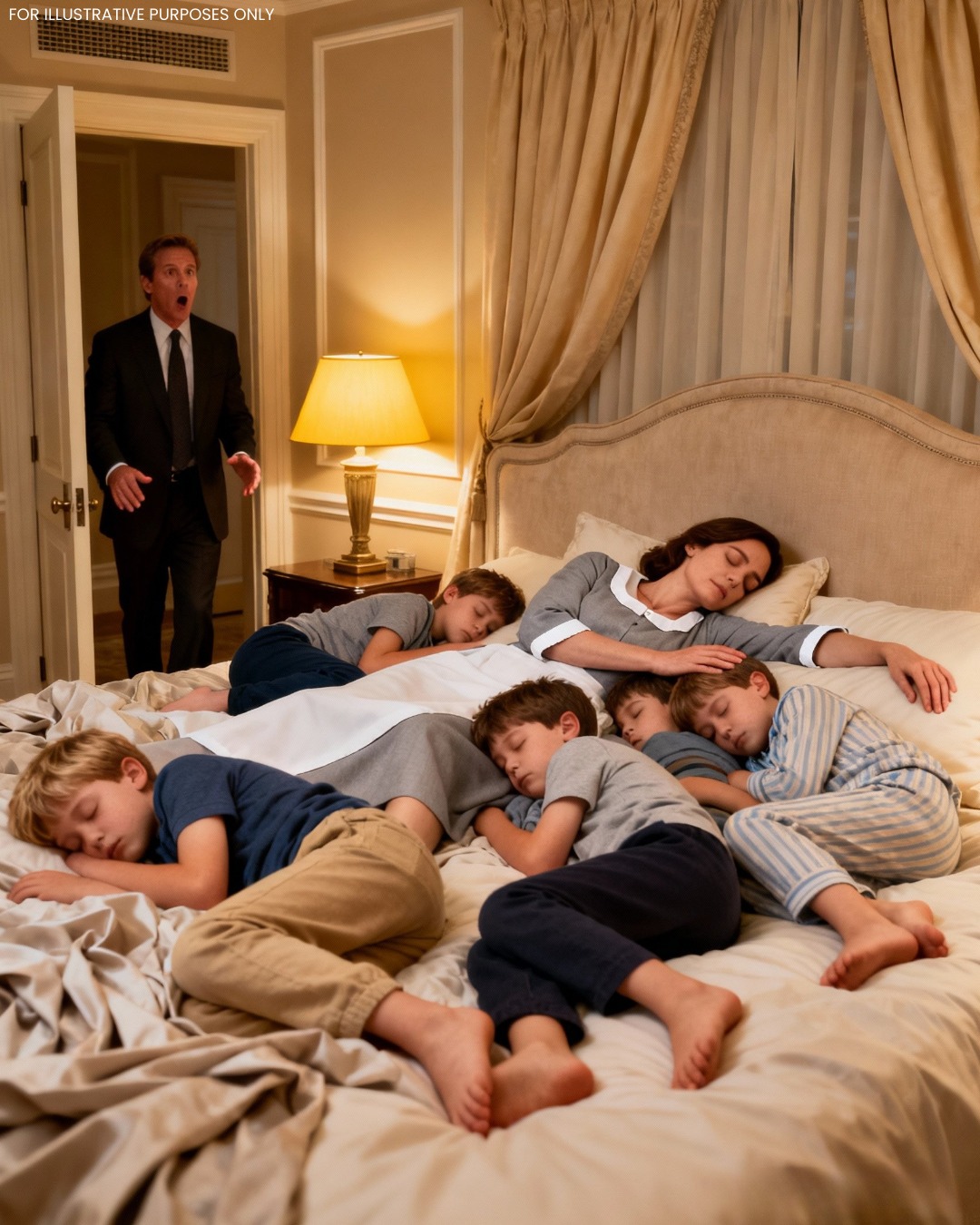
Conflict came when family members questioned Elena’s place in the home, warning Josh about appearances and boundaries. He listened, then watched his children sleep peacefully for the first time in months.
One night, Molly collapsed with a high fever. Panic filled the house. Elena stayed calm, guiding Josh through every step until medical help arrived. The diagnosis was serious but manageable.
At the hospital, Josh finally understood that love was not about replacement, but presence.
Later that night, back home, he found Elena in the kitchen preparing soup, exhaustion evident in every movement.
“You stayed,” he said.
“I always do,” she replied.
He told her the truth, not as a businessman, but as a father.
“I love you,” he said. “Not because you saved us, but because you chose us.”
Elena hesitated, then nodded.
“I love this family,” she replied. “That includes you.”
A year later, the house no longer felt haunted. It felt alive.
Elena completed her degree. Josh restructured his life. The children grew into themselves again.
One afternoon, Molly handed Elena a drawing of seven figures holding hands beneath a bright sky.
“That is us,” she said simply.
And Elena understood that love does not replace what was lost. It expands it.
