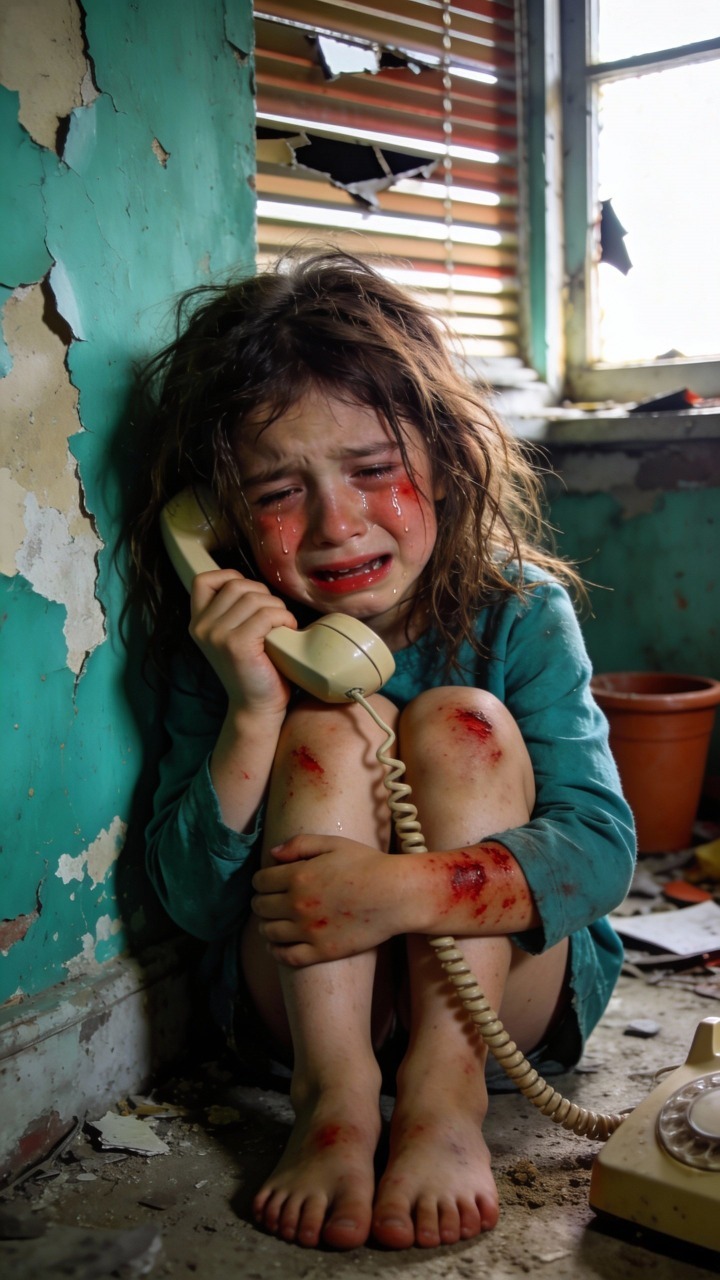
My name is Helen Ward, and for twenty-two years I have lived as a ghost.
I exist in a windowless room in Silverwood, Michigan, surrounded by the steady hum of cooling fans and the faint bite of ozone in the air. To the people who call me, I am not a woman with a face or a life—I am a voice. A lifeline. A confession booth. Sometimes, the last sound they ever hear.
The dispatch center has its own gravity. A heavy, pressurized silence that settles in your chest. It smells like burnt coffee, industrial carpet cleaner, and adrenaline—the kind that seeps out of your skin after years of sitting in the dark, listening to other people’s worst moments.
Most people think this job is about talking. About barking instructions or calming hysteria.
They’re wrong.
It’s about listening. Listening for what isn’t said. The hitch in a breath. The sound of breaking glass in the background. The silence that screams louder than any siren.
It was a Tuesday morning in late October, one of those autumn days that looks warm but isn’t. Outside, the maples of Silverwood burned red and gold, dying beautifully. Inside, my world was three monitors and a headset.
The morning had been quiet. A minor crash on Route 9. A neighbor dispute over a barking dog. Routine calls—the kind that lower your guard. I had just lifted my third lukewarm coffee when my headset chimed.
Not the sharp ring of a cell call.
The dull, heavy tone of a landline.
Rare now. Landlines usually meant the elderly—or the very poor.
“911, what’s your emergency?” I said.
My voice was steady, practiced. Detached. That detachment is armor. Without it, this job eats you alive.
For a long moment, there was no reply.
I pressed the headset tighter. “911. This line is recorded. Can you tell me what’s wrong?”
Still nothing.
But it wasn’t empty silence.
I could hear breathing—wet, uneven, frightened. Shallow gasps, like a small animal trapped somewhere it couldn’t escape.
I leaned forward, coffee forgotten, fingers turning the volume all the way up.
“Hello?” I softened my voice, shedding authority for warmth. “I can hear you breathing. You’re not in trouble. My name is Helen. Can you tell me what’s happening?”
A tiny voice answered at last—thin, shaking, fragile as spun glass.
“There’s… ants in my bed,” she whispered. “And my legs hurt.”
Ants. Children say strange things. Nightmares. Imaginations. But this wasn’t a dream voice. This was terror—raw and awake.
Then she said the words that stopped my heart.
“I can’t close them.”
I froze.
“I can’t close my legs.”
In twenty-two years, you learn to categorize danger instantly. That phrase—spoken by a child—usually points to something unspeakable. My stomach twisted, nausea rising hard and fast.
“I’m here with you,” I said softly, slipping into the child-caller protocol. “You’re doing a great job. What’s your name, sweetheart?”
“Mia,” she whispered. “I’m six.”
Six.
My grandson was six. He was probably worrying about crayons in a classroom somewhere. Mia was trapped in a nightmare.
“Okay, Mia. Is your mommy or daddy with you?”
“Mommy went to work,” she said, voice cracking. “She told me not to open the door for anyone.”
A latchkey child. Not uncommon in Silverwood. Factories gone. Parents working double shifts just to survive.
“You followed the rules,” I reassured her. “I’m not at the door, Mia. I’m on the phone. You said your legs hurt?”
“Yes,” she gasped. “It burns. Like fire.”
The address pinged onto my screen.
404 Elm Street.
South side. Near the old textile mill. Crumbling houses. Broken streetlights.
I waved my supervisor over. Child alone. Medical distress.
“Mia,” I asked carefully, dread coiling tight. “Is anyone there with you? Did someone hurt you?”
“No,” she said, confused. “Just the ants. They’re… eating me.”
That didn’t make sense.
But the pain was real.
Units were dispatched. Priority One.
“Mia,” I said, forcing calm, “help is coming. You need to stay with me. Can you hear cartoons?”
“Yes,” she murmured.
Cheerful music played faintly in the background—bright and wrong against her fading voice.
“I’m tired,” she slurred.
Her speech was thick now.
“No sleeping,” I said urgently. “Tell me what your house looks like.”
“I can’t move,” she cried weakly. “My legs are so big.”
Big.
Swelling. Burning. Fatigue.
This wasn’t abuse.
“Mia,” I asked gently, “what color are the ants?”
“They’re red.”
Fire ants.
“Listen to me,” I said. “You’re having an allergic reaction. That’s why you feel sleepy. You have to fight it, okay?”
“Like Batman?”
“Yes. Exactly like Batman.”
Sirens finally cut through the line.
“Mia, can you hear them?”
“I hear them,” she whispered.
Her breathing faltered.
“Mia!”
“I’m here,” she gasped, air whistling through a closing throat.
“Tell me your house color.”
“Green,” she said. “Paint falling off. Broken flower pot by the stairs.”
Officer James Keller found the house instantly.
The ants were everywhere.
The door came down.
Inside, the room was alive.
Mia lay frozen in her bed, legs swollen beyond recognition, forced apart by the pressure of inflammation. Red ants swarmed her skin in frantic motion.
She couldn’t close them—because she physically couldn’t.
They carried her out wrapped in sheets. She weighed almost nothing.
“Am I in trouble?” she slurred.
“No,” James said, choking. “You’re the bravest girl I know.”
The line went dead.
Minutes later: epinephrine administered. Airway barely holding.
Two hours later: stabilized.
Another ten minutes and she would have died.
That evening, the hospital asked if I would speak to her.
“Helen?” Mia rasped.
“I’m here.”
“Did the ants go away?”
“Yes, sweetheart. You’re safe.”
“Thank you for helping me close the door.”
I understood.
Three months later, winter covered Silverwood in white. A bright envelope arrived, addressed to:
THE LADY WHO LISTENS
Inside was a crayon drawing. Mia stood smiling. Her legs dotted but strong.
MY LEGS ARE FIXED
I AM BRAVE LIKE BATMAN
LOVE, MIA
I pinned it beside my grandson’s photo.
The world is loud. Cruel. Indifferent.
But sometimes hope begins quietly—with a whisper in the dark, and someone willing to listen.
And as long as someone answers, hope survives.