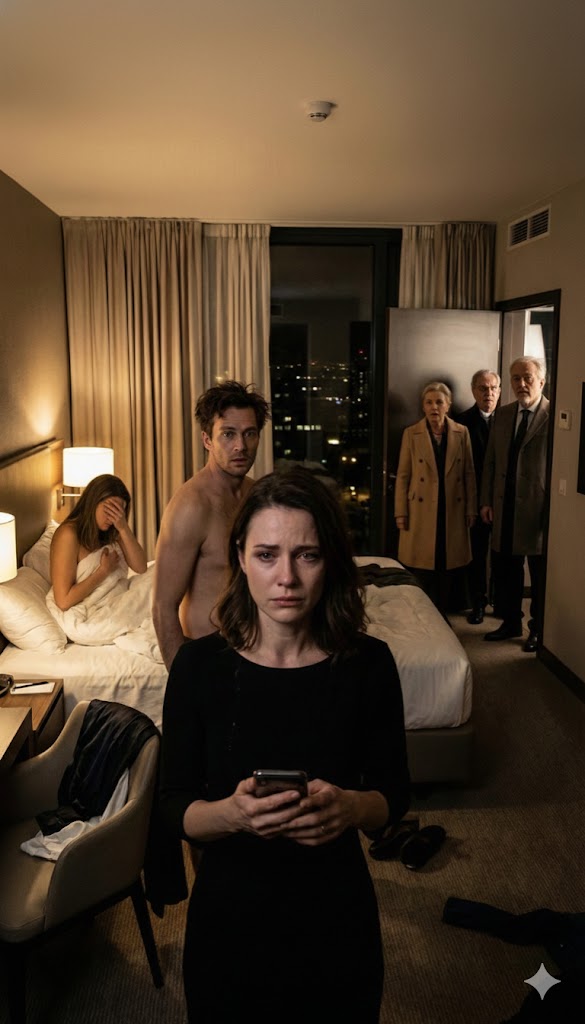
My name is Charlotte Hayes, and if you believe betrayal announces itself with thunder—loud, sudden, unmistakable—you’re wrong. Betrayal is quieter than that. It creeps in slowly, disguised as exhaustion, tucked inside small lies that sound harmless until they begin echoing in your chest.
My husband, Daniel, used to laugh with his whole face. He cooked pasta at midnight because I once mentioned craving it. He kissed my forehead every morning like it was a promise neither of us needed to explain. But promises weaken when truth erodes them. For nearly a year, I watched him drift away—not dramatically, not all at once, but gradually, like sand slipping through an open hand.
People often ask how I knew.
They expect something cinematic: lipstick on a collar, unfamiliar perfume, a dramatic confession. The truth was quieter—and crueler. Patterns stopped lining up. “Late nights” at work, yet he came home without real fatigue, only a rehearsed calm. His phone, once left anywhere, began sleeping face-down, guarded by passcodes and silence. New clothes appeared—too intentional, too confident, nothing like the man I married.
Ten years of marriage teaches you the difference between privacy and secrecy.
Daniel wasn’t being private anymore.
He was hiding.
The confirmation came on an ordinary Wednesday—the kind of day that brands itself into memory because it began so normally. A hotel charge appeared on our joint credit card. Local. Expensive. Entirely unnecessary unless someone was paying for more than a bed.
My fingers shook for three seconds.
Then everything inside me went still, as if my heart understood the truth before my mind could argue with it.
I didn’t confront him.
I didn’t scream.
I didn’t ask why.
Instead, I decided that if the truth wanted to appear, I would let it do so openly.
That evening, I sat in a small bakery across the street from the hotel. It smelled of vanilla and warmth—an almost cruel contrast to the clarity settling in my chest. At exactly 6:19 p.m., Daniel walked into the lobby.
A woman was looped comfortably through his arm.
She was younger. Polished. Confident in the way people are when they believe the outcome is already secured. They laughed at the reception desk, as though secrecy were something to celebrate.
They checked in.
They stepped into the elevator.
They trusted in privacy.
The receptionist, disarmed by politeness and a rehearsed story, shared the room number.
Room 908.
I stepped outside into the mild evening air and did one thing.
I texted his mother.
Then I texted my parents.
The message was brief. Precise. Unemotional.
Daniel is at the Riverside Crown Hotel. Room 908.
I thought you deserved to know.
Then I waited.
The replies came quickly—not frantic, not dramatic, just the sound of reality spreading through people who loved him too much to keep pretending. I didn’t answer. I wasn’t seeking conversation. I wanted witnesses.
Daniel’s mother, Eleanor, arrived first, holding her composure like armor. My father followed, silent in a way that carried weight. My mother came next, heartbroken but steady.
I waited until they entered.
Then I followed.
The hallway outside Room 908 was quiet—not tense, not chaotic. Just still. Consequence doesn’t rush; it arrives exactly when it’s supposed to.
When the door opened, Daniel stood there half-dressed, caught between the man he pretended to be and the one he actually was. The woman behind him froze, her confidence dissolving the moment she understood this wasn’t drama—it was evidence.
No one shouted.
The silence was far worse.
Eleanor’s face broke before her voice did. My father’s jaw tightened. My mother looked at the woman not with anger, but with a kind of pity that cut deeper than accusation.
Daniel tried to speak.
Nothing landed.
“What is this?” he asked, absurd in his denial.
Eleanor didn’t scream.
She didn’t cry.
She didn’t raise a hand.
She said calmly,
“Get dressed. You don’t get to run from this.”
Later, downstairs in the lounge, as Daniel stumbled through excuses and apologies, something unexpected happened.
The woman finally spoke.
“She told me she was divorced.”
The sentence dropped like glass on stone.
She showed us her phone—messages, photos, conversations. Daniel hadn’t just betrayed me; he’d built an entire story in which he was the victim. He had lied to her, too.
That changed everything.
Betrayal hurts.
Manipulation insults.
I realized I wasn’t leaving a broken marriage. I was walking away from someone who would rather rewrite reality than take responsibility.
I spoke calmly, almost gently.
“Daniel, I’m not here to argue. I’m here to close the door you opened.”
He didn’t come home that night.
I didn’t expect him to.
The next morning, I packed his things neatly and handed them to his mother. I called an attorney before my coffee cooled.
He tried to control the narrative—told friends I humiliated him, told coworkers I ruined his life. But every version collapsed under evidence. Screenshots. Witnesses. Silence whenever proof appeared.
Months passed. Divorce papers. Quiet mornings. Peace returning without fanfare.
Here’s the part people don’t expect:
Eleanor didn’t disappear from my life.
She came to my home months later, not to defend him, but to apologize—for assuming loyalty meant silence, for not asking harder questions. We didn’t blame each other. We grieved the life we thought existed.
Daniel once told me that night destroyed him.
“No,” I said.
“It revealed you.”
I sold the house. Moved somewhere smaller. Sunnier. Quieter. Somewhere peace didn’t feel like something I had to earn.
People ask if I regret making the private public.
I don’t.
Affairs survive in shadows. Truth needs daylight. Accountability isn’t cruelty—it’s clarity. And sometimes the strongest response isn’t confrontation or revenge, but refusing to carry someone else’s lies any longer.
The Lesson
Betrayal isn’t just choosing another person—it’s choosing dishonesty over integrity. Strength isn’t always loud. Sometimes it’s the quiet certainty of walking away without negotiation.
Healing isn’t revenge.
Healing is clarity.
And clarity, once earned, never leaves.