I hadn’t wanted a baby shower. I told my friends that more than once. What I wanted was peace—just a quiet afternoon, a few cupcakes, and something to distract me from the constant fear tightening in my chest. My pregnancy had been complicated from the start. One medical issue followed another, and the bills kept coming faster than I could open them.
My husband had died the year before in a workplace accident. Since then, it had felt like the world expected me to keep moving forward without ever acknowledging how heavy everything had become. It was just me now. Me and the baby.
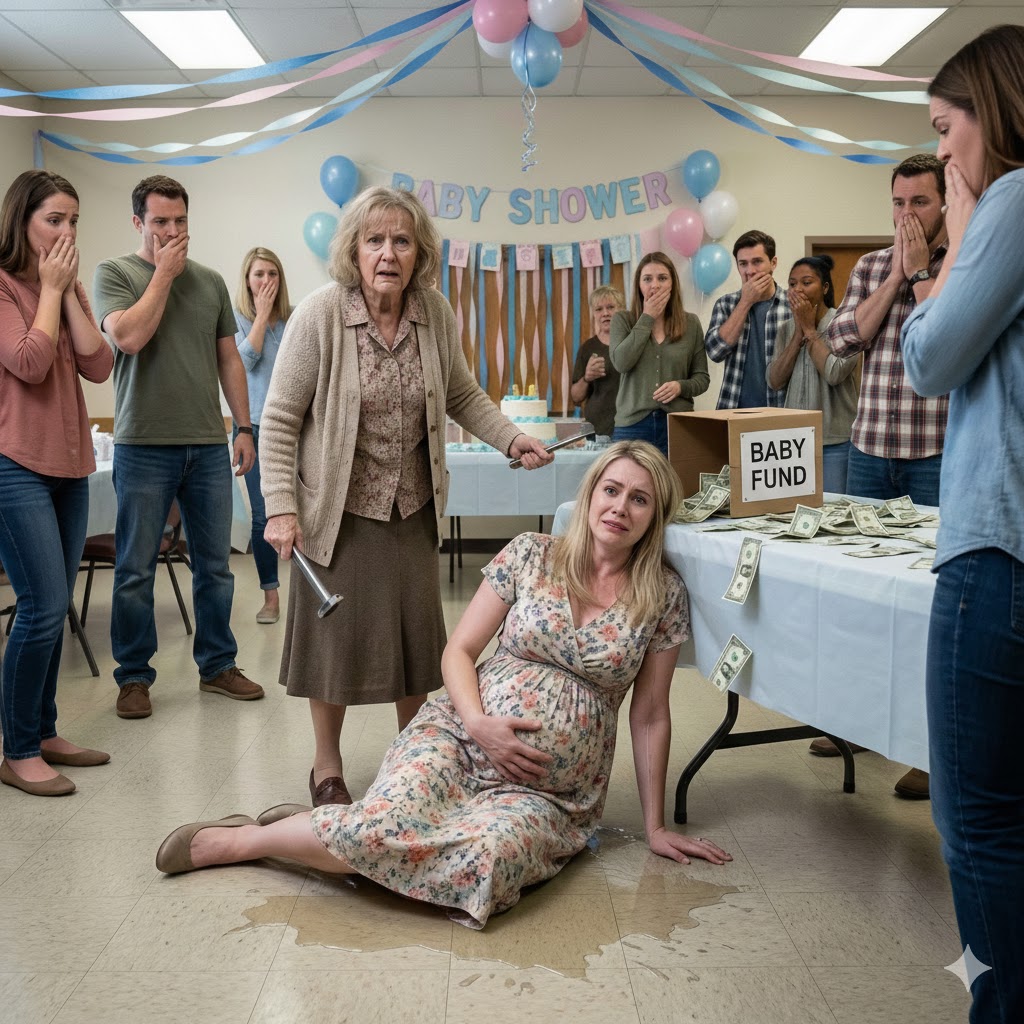
The shower was held in a small community hall in Cedar Falls, Iowa. Pink and white balloons lined the walls, and a long table held homemade food, wrapped gifts, and—unbeknownst to me—a simple cardboard box placed near the center. My best friend Lauren had set it there quietly. A piece of paper taped to the front read:
For Emily and her baby — medical support.
I didn’t notice the box at first. I was busy greeting people, hugging friends, forcing smiles through exhaustion. Then Lauren tapped her glass and asked for everyone’s attention. She explained that friends, coworkers, and even neighbors had come together to help with my medical expenses.
When she finished counting the donations, the room fell silent.
“Forty-seven thousand dollars,” she said softly, her voice trembling.
I broke down. I couldn’t stop crying. That amount of money meant I could breathe again. It meant I wouldn’t have to choose between prenatal care and food. People applauded, some wiped away tears, and for the first time in months, I felt real hope.
That’s when I noticed my mother.
Carol had arrived late and barely spoken. Now she was staring—not at me, not at my belly—but at the donation box. Her gaze was fixed, sharp, and unsettling.
She walked toward the table.
“That money should be handled by family,” she said loudly.
Before I could respond, she reached for the box. Instinct kicked in. I stepped in front of her and said, “Mom, stop. That money is for my medical bills.”
Her expression changed instantly. Any warmth vanished.
“I raised you,” she snapped. “You owe me.”
People began murmuring. I told her to leave. My voice shook, but I meant it.
That’s when she reached behind the table.
She grabbed a heavy iron rod that had been holding part of a decorative arch in place and swung it with all her strength.
The pain was immediate and overwhelming. I felt crushing pressure, then a terrifying warmth spreading down my legs. Someone screamed that my water had broken. The room spun. My ears rang. As I collapsed to the floor, the last thing I saw was blood on the tiles—
Then everything went black.
I woke up under blinding hospital lights, pain tearing through my abdomen. Machines beeped around me. Nurses shouted instructions. A doctor stood over me, his face tight with urgency. I tried to move, but my body wouldn’t respond. Panic surged through me with one overwhelming thought: my baby.
I was rushed into emergency surgery. Later, I learned the impact had caused placental abruption and triggered premature labor. My son, Noah, was delivered by emergency C-section and taken straight to the NICU. I didn’t get to hold him. I didn’t even hear him cry.
When I finally became fully conscious, Lauren was sitting beside my bed, her eyes red from crying. She told me Noah was alive but fragile—just over four pounds and needing breathing support. I grabbed her hand and sobbed, relief and fear crashing over me at once.
Then she told me about my mother.
Security had restrained her until police arrived. Several guests had recorded everything—the argument, the attempted grab, the swing of the rod. My mother was arrested on the spot for aggravated assault.
A detective visited me the next day. He spoke gently but clearly and told me the district attorney intended to press charges. When he asked if I was willing to cooperate, I said yes without hesitation.
My mother tried to contact me from jail. Her voicemails blamed stress, money problems, even me. She never once asked about her grandson. I never responded.
The community showed up for us in ways I still struggle to put into words. The story spread locally, and support poured in—meals, supplies, messages of encouragement. The money raised covered the surgery, the NICU stay, and months of follow-up care. Noah spent six weeks in the hospital. Every day, I sat beside his incubator, whispering promises that I would protect him no matter what.
When he finally came home—small, but strong—I made another decision. I filed for a permanent restraining order against my mother and cut off contact completely. I learned that family isn’t defined by blood, but by who chooses not to harm you.
The trial came months later.
The courtroom was silent as the prosecutor played the video. You could hear my mother’s voice—angry, entitled. You could see me stepping in front of the donation box, one hand over my belly. Then the swing. Several people looked away.
She was convicted of felony assault and sentenced to prison. The judge stated plainly that her actions were driven by greed and a complete disregard for human life. I didn’t feel relief—only a deep, quiet sadness for what she chose to become.
Life didn’t magically get easier afterward. Trauma lingers. Loud noises still make me flinch. Some nights I wake up replaying that moment. But Noah is thriving now—a healthy toddler with a laugh that fills every room.
I went back to school for medical billing, inspired by everything I was forced to learn the hard way. Now I help other families navigate healthcare costs. The kindness that saved me reshaped my future, and I try every day to pass it forward.
One lesson stayed with me above all else: setting boundaries is not betrayal. Walking away from someone who hurts you—even a parent—can be the bravest act of love you choose for yourself and your child.
If you’ve read this far, I want to ask you something:
Do you believe family should always be forgiven, or should accountability come first? Have you ever had to cut ties to protect yourself or someone you love?
Your story—or even your opinion—might be exactly what someone else needs to feel less alone.