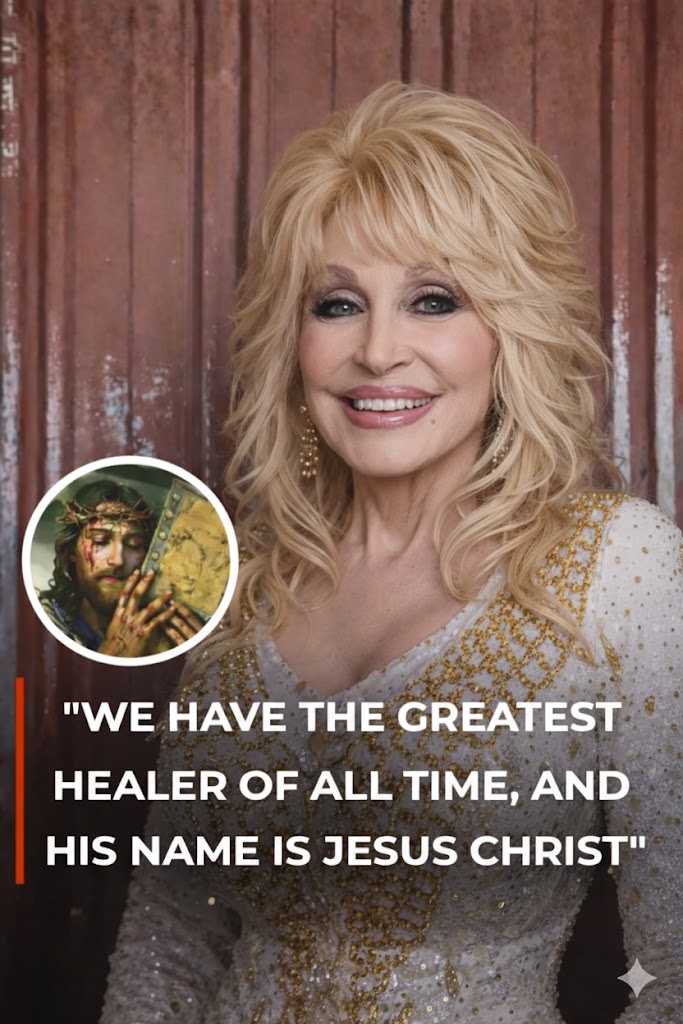
Dolly Parton has often spoken about a search for peace that reaches far beyond charts, crowds, and career milestones. At the heart of that journey, she points to Jesus Christ as a steady source of healing, grace, and restoration in her life.
For more than six decades, the Queen of Country has captivated the world with her unmistakable voice, glittering presence, and gift for storytelling. From her humble beginnings in the Smoky Mountains to global icon status—selling over 100 million records, earning countless awards, and creating cultural landmarks like Dollywood—Parton’s life is a testament to resilience, generosity, and joy. Yet beneath the rhinestones and laughter lies a quieter foundation: a lifelong faith that has anchored her through success, sorrow, and self-discovery.
Born in 1946 in a one-room cabin in Sevier County, Tennessee, as the fourth of twelve children, Parton grew up in deep poverty but rich in family and faith. Raised in a Pentecostal household, she was immersed early in church life—singing hymns, listening to passionate sermons, and learning the power of prayer. Her grandfather was a preacher, and music and spirituality were inseparable in her upbringing. Parton has often reflected on those early years, saying that Jesus was always central to her life. She has described reading the Bible daily, praying constantly, and viewing God as her closest companion. “God is my co-writer and co-pilot,” she has said, crediting her creativity to divine inspiration.
That spiritual foundation carried her to Nashville in 1964, where her rise to stardom was swift. Songs like “Jolene,” “I Will Always Love You,” and “9 to 5” cemented her as a once-in-a-generation songwriter, effortlessly blending country roots with pop appeal.
But success came with heavy burdens. Relentless touring, intense public scrutiny, and demanding business ventures took their toll. In the early 1980s, Parton entered one of the darkest periods of her life. Physical health challenges, emotional exhaustion, weight struggles, and personal heartache—including strain in her long-private marriage to Carl Dean and an emotional affair—left her overwhelmed and lost.
In her autobiography Dolly: My Life and Other Unfinished Business and later interviews, she revealed that this season led to deep depression. Despite outward success, she withdrew, felt consumed by sadness, and even contemplated suicide. She has spoken candidly about holding a gun while alone, describing it as a moment of profound despair. “It was a really bad time,” she admitted.
In that valley, Parton turned fully to her faith. She prayed intensely, sought guidance through Scripture, and felt God’s presence steady her. “Faith gave me the strength to hit my knees and pray,” she has said. While therapy played a role in her healing, she credits Jesus with ultimately restoring her sense of purpose, humility, and peace. That period became a turning point—marked by surrender, self-forgiveness, and renewal.
Faith has always threaded through Parton’s music, but it shines most clearly in her gospel work. Her first gospel album, Golden Streets of Glory (1971), blended original spiritual songs with traditional hymns. Later projects such as Precious Memories (1999), Letter to Heaven: Songs of Faith & Inspiration, and songs like “There Was Jesus,” “God’s Coloring Book,” and “The Seeker” reflect a deeply personal spirituality—one that finds God in everyday struggles and quiet beauty.
Even her Christmas albums and collaborations often carry messages of hope, redemption, and grace. “I try to lead people to Him,” Parton has said. “If they see something in me they love, let them see it’s God’s light.”
On stage, her performances often feel communal, almost revival-like. Between songs, she shares stories rooted in compassion, forgiveness, and love. Well into her late seventies and early eighties, she continues to create and perform—releasing projects like Rockstar (2023) while still weaving spiritual themes throughout her work.
Her faith also finds expression through action. The Imagination Library, inspired by her father’s illiteracy, has gifted more than 200 million books to children worldwide. Dollywood itself includes the Robert F. Thomas Chapel, a quiet place for reflection amid celebration—symbolizing her belief that joy and faith can coexist.
Parton’s Christianity is notably inclusive. She emphasizes love without judgment and has consistently supported unity and LGBTQ+ rights, often saying, “Jesus loved everybody.” While this stance has drawn criticism from some, she remains unwavering: “I will never hide my love for the Lord.”
In recent years, as health challenges and reflection have become more present, Parton continues to speak openly about faith as her grounding force. “With God, all things are possible,” she often affirms. Her marriage to Carl Dean, enduring since 1966, has likewise been sustained by shared values, prayer, and mutual respect.
Dolly Parton’s story is ultimately one of grace overcoming hardship. In a world where success can amplify restlessness, she models a different path—one that finds true peace not in applause, but in surrender, trust, and enduring faith. Her life and music remind us that real healing flows from divine love, lingering long after the spotlight fades.