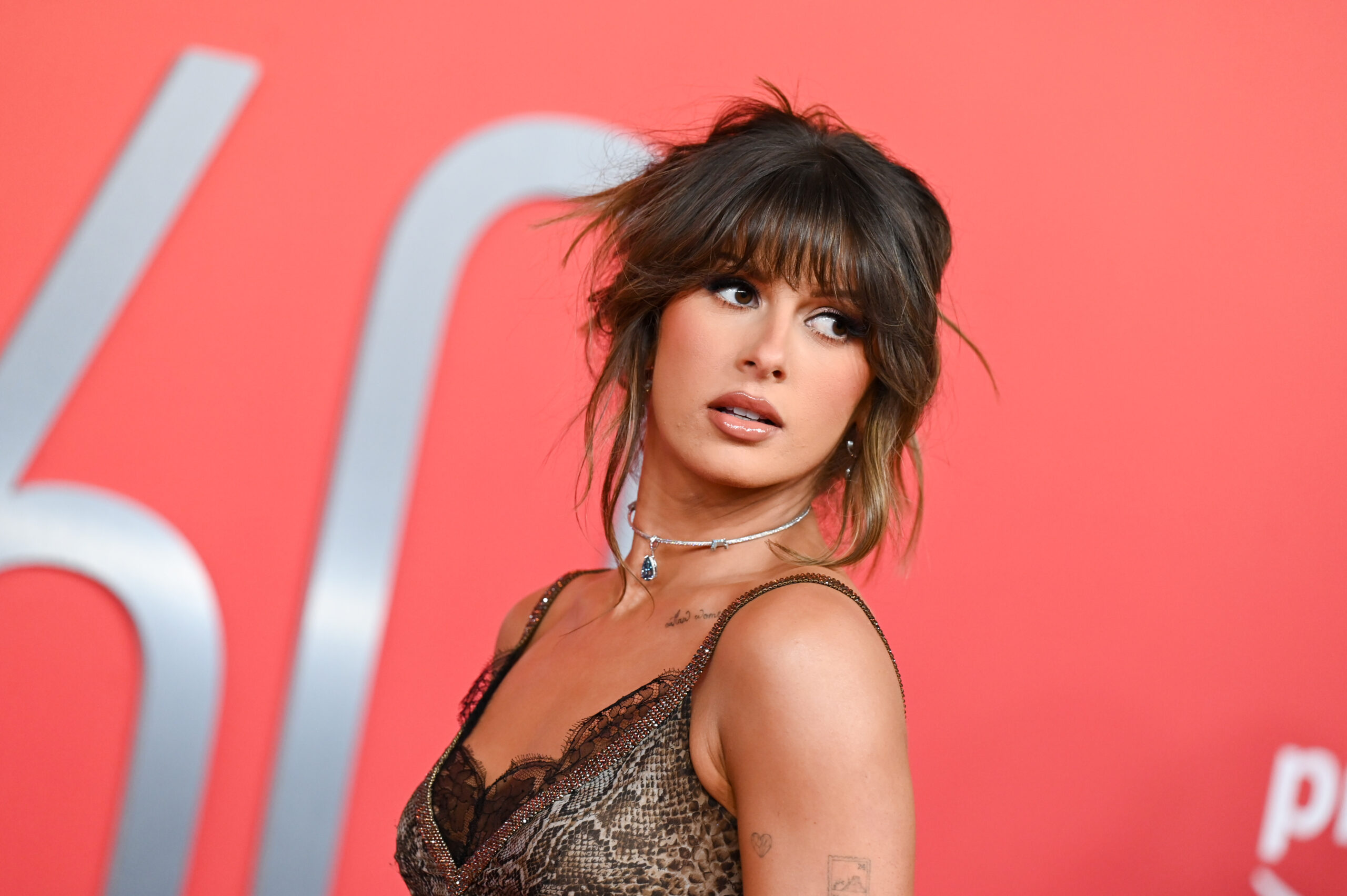
Like many modern controversies, this one didn’t begin with a formal statement or press conference. It started with a blurry clip, a striking quote, and a comment section that ignited almost instantly.
In recent days, posts spreading across Facebook and other platforms have claimed that country artist Ella Langley said, “I don’t care if they cancel me again. I stand with ICE.” The framing suggests a bold step into one of the most sensitive political debates—territory Nashville artists are often warned to avoid unless they’re prepared for the fallout.
Yet an important detail is getting lost amid the noise: the quote has primarily circulated through reposts and sensational “breaking news” pages rather than established music or journalism outlets. In today’s environment, where captions can travel faster than verification, that distinction matters—especially to audiences who’ve seen how careers can pivot dramatically based on a single line, sometimes stripped of context.
Why This Issue Sparks Such Strong Reactions
ICE sits at the center of a deeply emotional national conversation. To some, it represents necessary enforcement; to others, it symbolizes controversial immigration practices. Either way, it’s a subject capable of dividing families, communities, and fanbases.
That’s why the suggestion of a rising country star openly aligning with the agency hits with unusual force. Country music has long embraced themes of patriotism and personal conviction, but direct association with a politically charged institution carries a different weight. Nashville, despite its outspoken image, is often pragmatic about protecting artists from branding that could narrow their appeal.
The Timing Adds Fuel
Ella Langley is not an unknown figure on the fringe of the genre. By late 2025 and into early 2026, industry coverage has positioned her as a fast-rising voice in modern country. For artists at that stage, controversy doesn’t simply create headlines—it can influence radio play, sponsorship decisions, venue relationships, and audience loyalty.
When a narrative shifts from songs to politics, fans can feel pulled into a debate they never signed up for.
The Loaded Meaning of “Cancel Me Again”
The phrase “cancel me” resonates because listeners recognize the tension between artistic freedom and public backlash. Country music, in particular, has long wrestled with where personal opinion ends and professional risk begins.
Supporters reading the viral claim interpret the alleged quote as defiance and authenticity. Critics see it as provocation—an invitation to polarize. Either interpretation shows how quickly a few words can become symbolic far beyond their original context.
What Can Actually Be Verified
At the moment, the loudest versions of this story appear concentrated in viral social media posts, while mainstream reporting has focused on Langley’s music milestones and touring rather than confirming the quote or its circumstances.
That absence doesn’t automatically invalidate the clip—but it underscores a simple principle: pause before sharing. Online momentum can blur the line between repetition and verification, and once a narrative hardens, corrections rarely travel as far as the original claim.
The Bigger Picture
Whether the quote is accurate, incomplete, or misrepresented, the larger story may be about how quickly a political flashpoint can eclipse an artist’s creative identity. Conversations that once centered on songwriting and performance can be replaced overnight by ideological debate.
And even when context eventually surfaces, reputational effects often linger.
A Reminder for Social Media Readers
If you encounter viral claims like this:
-
Seek full-length footage rather than clipped excerpts.
-
Look for reporting from outlets known for verification.
-
Be wary of sensational “breaking” labels that lead to unrelated content.
In fast-moving online cycles, restraint is often the best safeguard for truth.
Ultimately, this episode—whether fully accurate or amplified beyond reality—illustrates a modern reality: in today’s media climate, an artist’s trajectory can shift not because of a song release, but because of a sentence that spreads faster than context can follow.