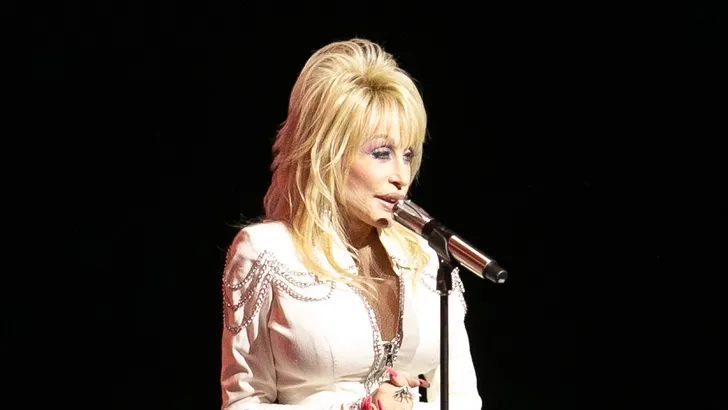
When Dolly Parton speaks, the music industry pays attention. But when she talks about faith, love, and human dignity, the resonance extends far beyond Nashville. In a candid and widely circulated statement, she addressed those who invoke religion to justify discrimination against LGBTQ+ people, saying in essence that true faith cannot coexist with judgment or exclusion—that if you believe in God’s love, it must extend to everyone.
The response was swift. Admirers applauded her moral clarity, while critics claimed she had strayed from traditional values. Dolly did not waver. She made it clear that cruelty disguised as faith is not faith at all—it’s a distortion of it.
Raised in the Pentecostal churches of the Great Smoky Mountains, her spirituality has always been deeply personal rather than political. She doesn’t position herself against religion; she speaks from within it. And from that place, she draws a sharp distinction between sincere belief and outright bigotry.
For years, she has rejected the idea that God’s name can be used to shame or exclude. In her view, love is unconditional, judgment is human—not divine—and exclusion has no sacred foundation.
Her convictions show up not only in interviews but in action. When some conservative voices criticized Dollywood for being welcoming to LGBTQ+ guests and events, she stood firm. Her stance was simple: every person deserves the freedom to live authentically and love openly.
That same spirit runs through her art. In the song “Family” from Eagle When She Flies, she portrays love as imperfect yet unwavering. She later wrote “Travelin’ Thru” for the film Transamerica, a story centered on identity and self-acceptance. The song earned an Academy Award nomination and strengthened her reputation as an ally.
What sets Dolly apart is her rare ability to connect communities often seen as divided. While openly supportive of LGBTQ+ rights, she remains cherished by many traditional country fans. Through initiatives like the Imagination Library, which has distributed hundreds of millions of books worldwide, she continues to champion dignity, education, and compassion as universal values.
By reclaiming faith from those who wield it as a weapon, Dolly Parton has offered a different vision of religious conviction—one rooted in humility and love. Her message is clear: God is not a tool for hate. And love does not require permission.