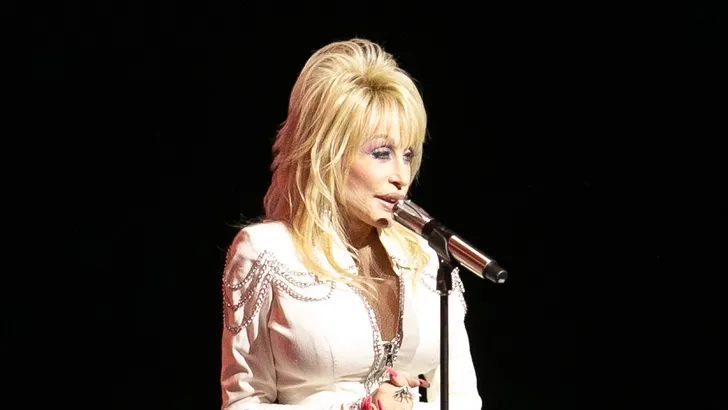
In the early 1990s, country music was riding a cultural wave. Line dancing filled dance floors, mullets ruled the fashion scene, and Billy Ray Cyrus had unexpectedly become a global heartthrob thanks to his breakout hit Achy Breaky Heart. While much of Nashville rushed to follow the trend, Dolly Parton chose a different path — she rewrote the narrative entirely.
Rather than dismiss the craze as a passing fad, Parton recognized an opportunity to have fun with it. The result was Romeo, a lively and tongue-in-cheek single released in 1993 that flipped country music’s traditional gender dynamics. Instead of women being cast as admirers, the song turned the male heartthrob into the object of affection, delivering humor, confidence, and unmistakable Dolly charm.
At its heart, “Romeo” tells the story of falling for the wrong kind of love — the kind that walks into a room and instantly steals attention without saying a word. Parton made the inspiration obvious, playfully referencing Cyrus’s rise to fame with a lyric about a “hillbilly with an aching heart.” The wink was intentional, and audiences understood the joke immediately.
The concept became even more memorable when Parton personally invited Cyrus to appear in the music video as the title character. In a clever reversal of the usual country video formula, he became the eye candy while Parton took creative control of the narrative.
She elevated the idea further by gathering an all-star lineup of female country artists — Mary Chapin Carpenter, Tanya Tucker, Kathy Mattea, and Pam Tillis — turning the video into a playful celebration of women openly admiring and teasing the male lead. Filmed in striking black and white, the video embraced theatrical humor and made its role reversal impossible to miss.
At a time when country music still leaned heavily on traditional gender roles, “Romeo” felt quietly groundbreaking. It allowed women to be bold, flirtatious, and in control while delivering its message through humor rather than confrontation — a balance that perfectly reflects Parton’s artistic style: sharp yet warm, progressive yet welcoming.
The song also highlighted the energy of her Slow Dancing with the Moon era. “Romeo” climbed to No. 27 on the Billboard Hot Country chart, earned a Grammy nomination, and carried a charitable purpose, with Parton donating her proceeds to relief efforts following Hurricane Andrew.
Perhaps the most classic Dolly twist lies in the irony behind it all. Despite celebrating a “country hunk” on screen, she has long said the only true Romeo in her life is her husband, Carl Dean. The flirtation was never personal — it was storytelling, humor, and mentorship wrapped into one clever cultural moment.
By turning Billy Ray Cyrus’s mullet-era fame into a self-aware joke, Dolly Parton didn’t just keep pace with the changing country scene in 1993 — she reminded Nashville once again that she wasn’t following trends. She was creating them.