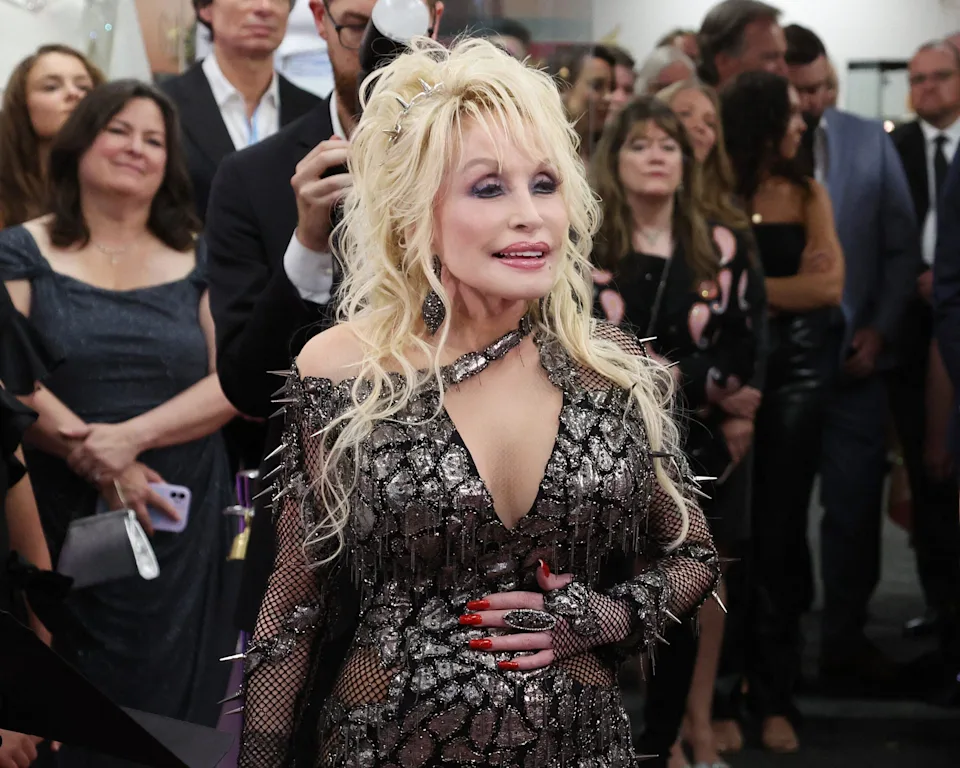
For a songwriter, few moments compare to hearing someone else turn your creation into a worldwide sensation. But when Dolly Parton first heard Whitney Houston’s soaring rendition of I Will Always Love You, the experience was so powerful it nearly caused an accident — forcing her to pull over immediately.
The Stunning Moment on the Radio
The unforgettable incident happened in 1992 while Parton was driving home from her office. Houston’s version had just been released as the lead single from The Bodyguard, which marked Houston’s film debut and co-starred Kevin Costner.
Parton originally wrote and recorded the song in 1974 as a heartfelt goodbye to her longtime professional partner, Porter Wagoner. Although she had approved its use in the film — at Costner’s specific request — she hadn’t been present during Houston’s recording and had not yet heard the finished version.
As she later shared in interviews, the opening notes came through her car radio. The a cappella introduction sounded familiar, but she couldn’t immediately identify it. She once joked that she felt “like a dog hearing a whistle,” recognizing something but not quite placing it.
Then the chorus arrived.
When Houston’s extraordinary voice burst into the iconic “I will always love you,” the sheer scale and intensity of the performance stunned Parton. It was dramatically different from her own gentle country arrangement — bigger, bolder, and emotionally explosive. She later admitted she had to pull over because she was so overwhelmed she feared she might crash.
Parton described it as one of the most emotional experiences of her life, amazed that Houston had taken her “little country sad song” and transformed it into something vast and breathtaking.
A Global Phenomenon
Parton’s emotional reaction proved prophetic. Houston’s version became a historic success:
-
Chart Record: It spent 14 consecutive weeks at No. 1 on the Billboard Hot 100, a record at the time.
-
Worldwide Sales: The single sold an estimated 20 million copies globally, becoming one of the best-selling singles in music history.
-
Royalties: Because Parton wisely retained the publishing rights — years earlier declining to give them up to Elvis Presley’s management — she earned millions in royalties, reportedly around $10 million in the 1990s alone.
She later invested part of those earnings into a commercial property in a predominantly Black neighborhood in Nashville, explaining that it felt especially meaningful given Houston’s role in the song’s extraordinary journey.
What began as a quiet country farewell in 1974 became, through Houston’s voice, one of the most powerful ballads ever recorded. And that moment on the side of the road wasn’t just personal shock — it marked the rise of a cultural landmark in music history.