Part One — The Van at the Gas Station
They kicked my daughter out of the condo we bought for her.
At least, that’s what I believed—until I saw the footage.
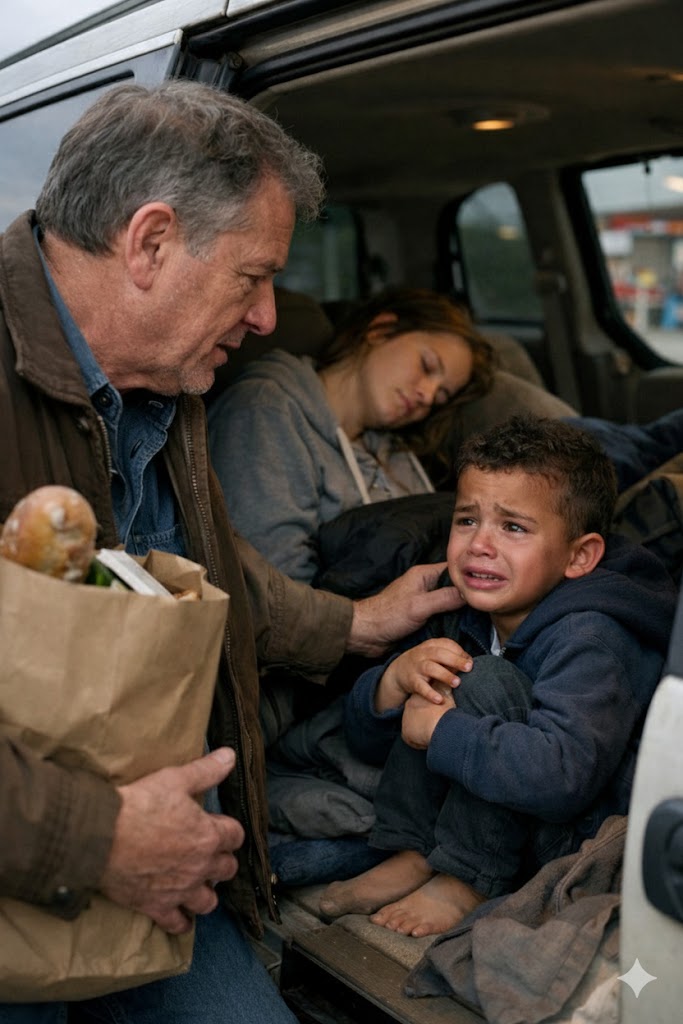
I found Lila in a rust-eaten van parked at a nearly deserted gas station just outside town. My grandson, Kairo, slept in the back seat, curled against the door, his tiny fists clenched as if even in sleep he was bracing for danger. His pale face looked too small for the fear that lived on it.
The moment Lila saw me, she fell apart.
“Dad… they threw us out,” she whispered, shaking. “Jonas and his mother changed the locks. They said the condo wasn’t mine. And they kept Kairo.”
Something cold and furious rose in my chest. I had bought that place—every wall, every inch of it—to give my daughter and grandson a safe future.
“Get out,” I said, opening the door. “You’re coming home.”
At my house, Kairo flinched at every sound. Lila sat at the table staring at nothing, hollowed out.
I called Conrad, an old friend and a ruthless lawyer.
“We’re going to war,” I told him.
Two days later, we sat in the building manager’s office. Mr. Hargrove looked exhausted before we’d even begun.
“This is a family dispute,” he said. “No clear legal violation.”
“There’s video,” I said sharply. “Your guard told me so.”
He sighed and pulled it up.
The hallway outside the condo filled the screen.
The door burst open.
It wasn’t Jonas pushing Lila.
It was Beatrix, gripping Kairo and pulling him back. Jonas stood behind her, pale and frantic.
And Lila—
Lila wasn’t being forced out.
She was lunging forward.
Her hands reached toward Kairo’s face—fingers stiff, nails extended, dangerously close to his eyes.
My chest locked. I couldn’t breathe.
Conrad grabbed my arm. “Henry… look.”
Security rushed in, pulling Kairo away as Lila screamed.
“That’s why we intervened,” Hargrove said quietly. “That’s why the locks were changed.”
No anger. No judgment.
Just truth.
And everything I thought I knew about my daughter collapsed into something dark and terrifying.
Part Two — The Truth I Wasn’t Ready For
The drive home felt endless. Every red light dragged. Every passing car felt like it was watching me.
How do you look at your child and ask why she tried to hurt her own baby?
At home, Kairo slept on the couch, a cartoon murmuring softly.
Lila stood by the window.
“Did you get the video?” she asked, hopeful.
My heart broke.
“Lila… we need to talk.”
I told her what I’d seen.
Her face crumpled—not with guilt, but with fear.
“I don’t know why,” she sobbed. “I love him. I love Kairo. But there’s this voice… it tells me he’s not safe. That I have to protect him.”
She told me about sleepless nights, panic, thoughts that wouldn’t stop.
“That morning he wouldn’t stop crying,” she whispered. “The voice said he was in pain… that I had to make it stop.”
Jonas had walked in at that moment. Beatrix saw Lila reaching for the baby and reacted.
They hadn’t been cruel.
They had been terrified.
I held my daughter, who felt heartbreakingly unfamiliar, and understood that something had stolen her mind.
Part Three — What Healing Looks Like
Conrad arrived the next morning.
“This isn’t a legal fight,” he said gently. “This is medical.”
He explained postpartum psychosis. Rare. Terrifying. Treatable.
Lila agreed to see a specialist that day.
Jonas and Beatrix met us later at Conrad’s office. Everyone looked exhausted.
“She needs help,” Jonas said quietly. “I tried to tell her.”
Beatrix resisted at first—but slowly, painfully, she listened.
Lila entered treatment. I cared for Kairo. Jonas visited daily.
Months passed.
Lila came back calmer, steadier. She held her son again. Beatrix started therapy, too.
The condo stopped being a battlefield and became a home again.
And I learned something I’ll never forget:
Sometimes love isn’t about fighting.
Sometimes it’s about understanding.
About choosing compassion when fear would be easier.
That’s where real healing begins.