“The One Who Kept the Secret”
“My parents threw me out at sixteen, telling me I was nothing but a failure.
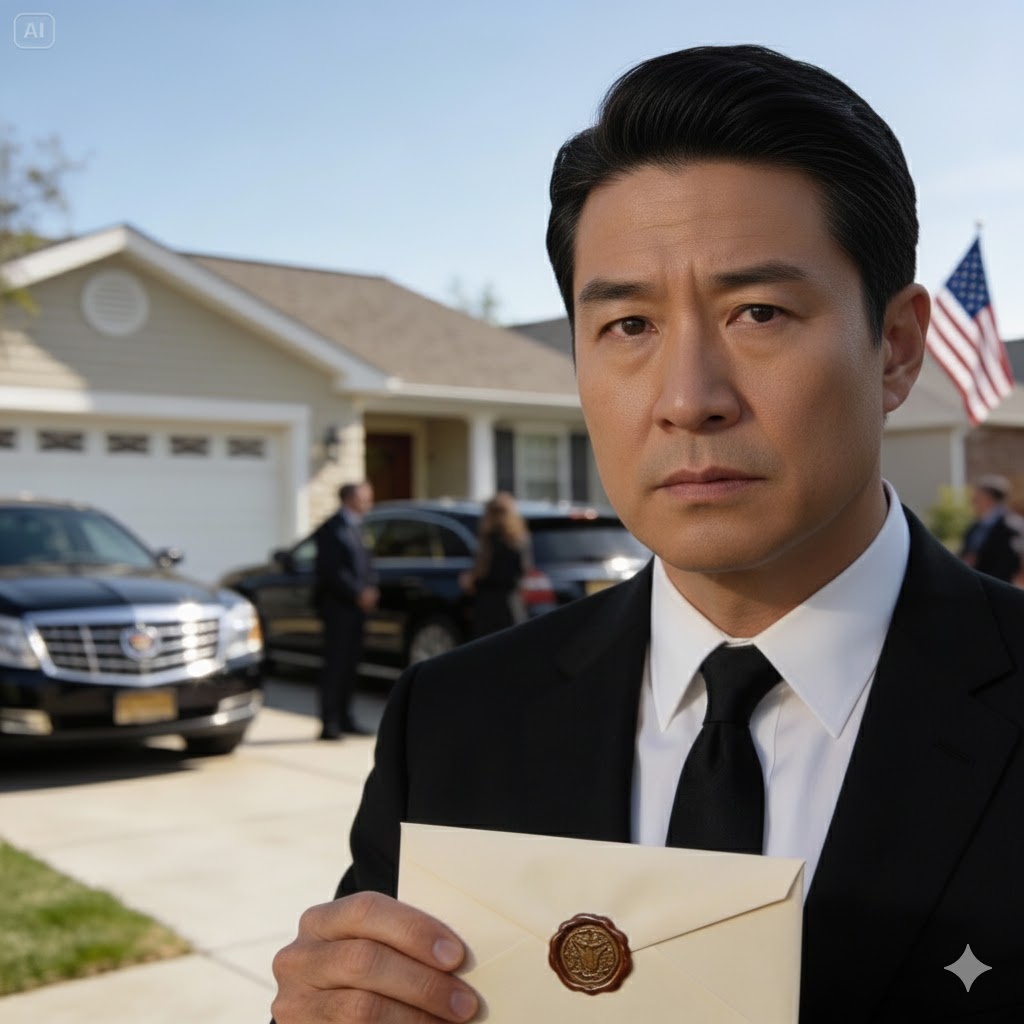
Twenty-four years later, they arrived at my grandfather’s funeral in luxury cars, demanding their share of his sixty-million-dollar estate.
The lawyer looked at me and said, ‘The true heir is the one who kept the secret safe.’
Then he handed me an envelope.
And in that moment, I understood why my entire life had been a test.”
Part 1 — Thrown Away at Sixteen
My name is Nathan Reed, and I learned very early how conditional love can be.
I was sixteen when my parents told me to leave. There was no shouting, no slammed doors. My father stood calmly in the doorway, arms crossed, and said,
“You’re nothing but a failure, Nathan. We’re done wasting time on you.”
My mother didn’t interrupt. She didn’t argue. She didn’t even look at me.
I packed a backpack and walked out before sunset—no money, no plan, just the quiet certainty that whatever I became would be in spite of them, not because of them.
The only person who didn’t turn his back on me was my grandfather, Arthur Reed.
He lived on the edge of town, far from my parents’ obsession with status and appearances. When I showed up at his door, he didn’t ask questions. He simply said,
“Stay as long as you need.”
Years passed. I worked construction during the day and studied at night. I learned how to fix things—walls, engines, mistakes. I learned patience. I learned restraint. And most importantly, I learned to stay quiet when people underestimated me.
Arthur noticed everything.
He never spoke badly about my parents, but sometimes he would look at me and say,
“Not everyone who smiles at money understands what it costs.”
When I was twenty-three, he asked me to help organize his records—deeds, business documents, old correspondence. He trusted me with details no one else ever saw.
I didn’t ask why.
I kept what he shared private—because he asked me to.
Then, twenty-four years after my parents threw me out, Arthur passed away.
The funeral was crowded. Luxury cars lined the street like trophies. My parents arrived smiling, confident, dressed like people who already believed the money was theirs.
My father noticed me and smirked.
“Didn’t expect to see you here,” he said. “This doesn’t concern you.”
Part 2 — The Secret That Changed Everything
At the lawyer’s office later that day, my parents demanded their share of Arthur’s sixty-million-dollar estate—loudly and without hesitation.
The lawyer didn’t rush. He didn’t argue. He simply adjusted his glasses and began to read.
“The true heir,” he said, “is the one who kept the secret safe.”
The room went silent.
He removed an envelope from his briefcase and turned toward me.
“Mr. Reed,” he said, “only you understand what this means.”
The envelope was simple—thick paper, worn at the edges. Inside were documents I recognized immediately: a private trust agreement, asset transfers dated years back, and a handwritten letter from my grandfather.
The lawyer read it aloud.
“Nathan, if you’re hearing this, then I’m gone—and the people who valued me only for my money have finally revealed themselves. You are not here because you demanded anything. You are here because you stayed.”
My mother’s smile disappeared. My father leaned forward.
“This is ridiculous,” he snapped. “He didn’t even have a will.”
“That’s correct,” the lawyer replied calmly. “He had something stronger.”
Arthur had created a conditional trust—airtight, legal, and intentionally quiet. The condition wasn’t bloodline, age, or obedience.
It was discretion.
Years earlier, Arthur had sold a controlling interest in one of his companies. The proceeds—tens of millions—were placed into accounts only one person knew how to access properly.
Me.
Because I had helped him secure and catalog everything. Because I never spoke about it. Because I never tried to benefit from it.
My father stood abruptly.
“He manipulated you!”
“No,” the lawyer replied. “Mr. Reed chose someone who demonstrated character over decades.”
Arthur left my parents something as well—just not what they expected. A letter explaining exactly why he never trusted them with his legacy. It detailed how they discarded their son and demanded loyalty they never earned.
My mother cried.
My father went pale.
The trust activated immediately.
I didn’t smile.
I didn’t gloat.
Because this wasn’t revenge.
It was acknowledgment.
Part 3 — When the Masks Fell
The aftermath was quieter than I expected.
My parents stopped calling me names and started calling attorneys. None of it mattered. The trust was sealed. The transfers complete. The documents flawless.
Relatives who hadn’t spoken to me in years suddenly remembered my birthday. I didn’t respond.
I moved into Arthur’s old house—not as a trophy, but as a reminder. The place where I learned patience. Where silence meant safety. Where trust was built slowly.
One evening, my mother showed up unannounced.
“We were wrong,” she said quietly. “We didn’t know what we were doing.”
I believed she believed that.
But belief doesn’t erase consequences.
“I didn’t succeed because you failed,” I told her. “I succeeded because Grandpa believed in me when you didn’t.”
She left without arguing.
My father never came.
Part 4 — What Silence Earned Me
People expect justice to be loud—dramatic confrontations, public humiliation.
This wasn’t that.
This was quiet.
I didn’t become rich overnight.
I became free.
Arthur didn’t reward me because I was perfect. He trusted me because I was consistent. Because I didn’t betray trust when no one was watching.
So here’s my question:
If you were thrown away at sixteen…
If the people who doubted you only returned when success arrived…
Would you forgive them?
Or would you let the truth speak for itself?
I know what I chose.