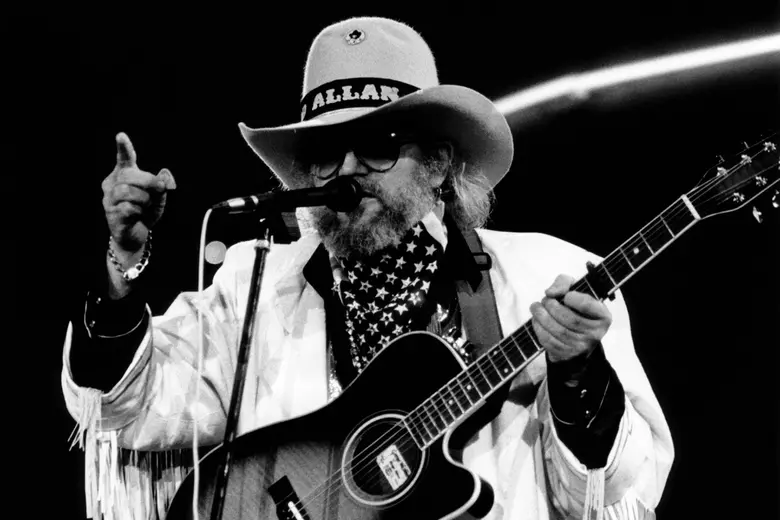
David Allan Coe, one of the most defining voices of the outlaw country movement, has passed away at the age of 86—marking the end of a chapter that helped reshape country music forever.
Rising to prominence in the 1970s, Coe built his name on raw storytelling, rebellion, and a refusal to fit into the polished mold of Nashville’s mainstream sound. Songs like “You Never Even Called Me by My Name” and “Longhaired Redneck” didn’t just entertain—they challenged the system and gave a voice to a different kind of country artist.
He stood alongside legends of the outlaw era, pushing back against convention and helping redefine what country music could be.
But his legacy wasn’t limited to his own recordings.
Behind the scenes, Coe proved just as powerful as a songwriter. Tanya Tucker took his song “Would You Lay With Me (In a Field of Stone)” to No. 1, while Johnny Paycheck turned “Take This Job and Shove It” into a chart-topping anthem that earned Coe a Grammy nomination. His writing connected across generations, carried by voices far beyond his own.
His life story was as complex as his music.
Born in Akron, Ohio in 1939, Coe spent much of his early years in reform schools and correctional facilities, where he first began writing songs. After his release, he made his way to Nashville, sometimes busking on the streets before finding his breakthrough.
That edge—the lived experience, the grit—never left his music.
At times, his career was surrounded by controversy, with criticism over certain lyrics and imagery. Coe addressed those accusations throughout his life, but his place in country music history remained undeniable.
More than 40 studio albums, decades of influence, and a legacy tied directly to the outlaw movement—his impact goes far beyond charts or headlines.
David Allan Coe wasn’t just part of outlaw country.
He helped define it.
And even in his absence, that rebellious spirit he carried into every song will continue to echo through the genre he helped change.