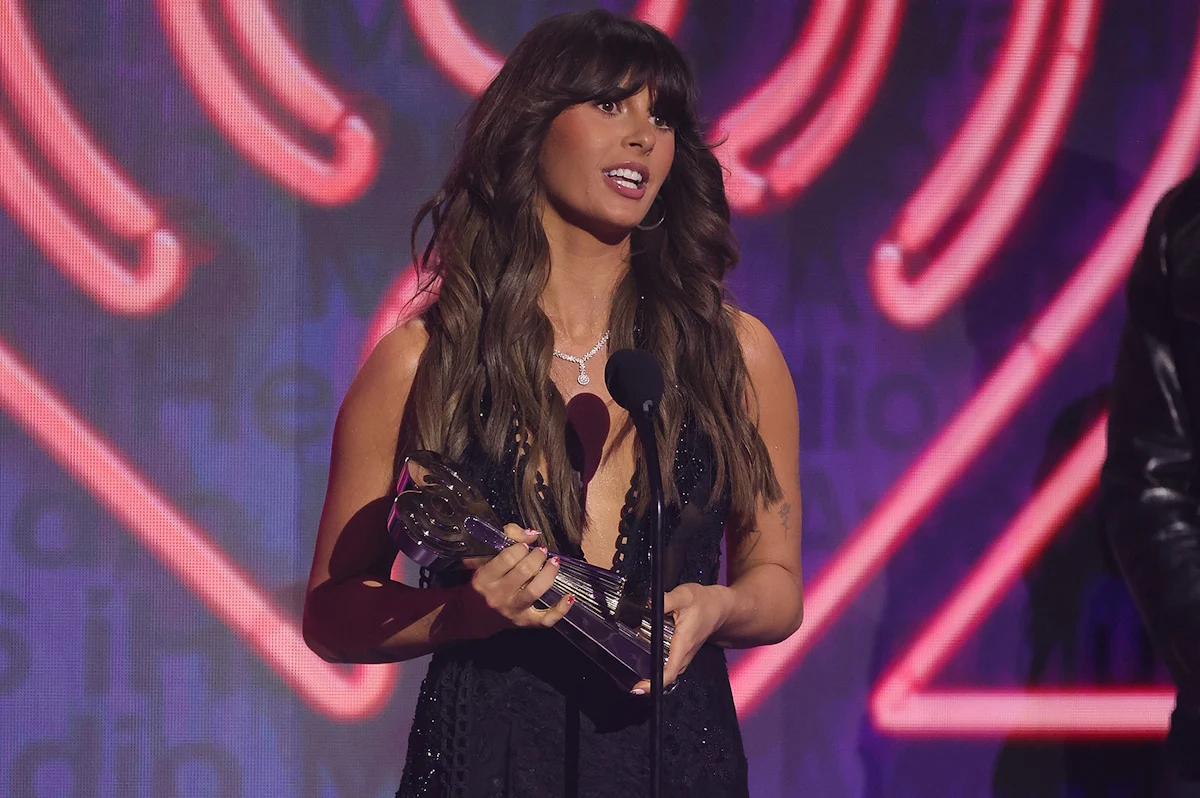
Ella Langley was not handed anything.
She grew up on a farm in Hope Hull, just outside Montgomery—a place most people couldn’t point to on a map. Her first songs weren’t sung on big stages, but in a small Baptist church. Her first “crowd”? A pasture full of cows. Not fans. Cows.
Music started at home. Her grandfather played by ear and hosted jam sessions with neighbors, planting the seed early. When he passed, she inherited his guitar at 14. No lessons. No roadmap. Just determination. She taught herself using a Bob Marley song and hours of stubborn practice out on the porch.
She didn’t even study music. At Auburn University, she chose forestry. During the week, classes. On weekends, bar gigs across Alabama—just enough to make a little money and keep the dream alive. Eventually, the burnout hit. She called her parents and made the decision that changes everything: she was dropping out and moving to Nashville.
She was 20. No record deal. No safety net.
Six months later, the world shut down.
COVID hit, and Nashville went silent. No shows. No writers’ rounds. No opportunities. Just an empty city and a dream that suddenly had nowhere to go. She stayed. She adapted. Livestreams, late-night writing sessions, songs that nobody heard. Behind the scenes, she was also fighting depression and imposter syndrome that didn’t just disappear when things got better.
Slowly, doors cracked open. She opened for Randy Houser. Played small writers’ rounds. Landed a publishing deal. Then a record deal. Then her debut album dropped… and landed at No. 80 on the Billboard 200.
Number 80.
Most people would’ve stalled there. She didn’t.
Now, that same girl from Hope Hull is being talked about alongside names like Taylor Swift and Dolly Parton. The charts, the numbers, the headlines—they all tell the same story: she kept showing up when nobody was watching.
Because this wasn’t luck.
This was years of grinding in silence, believing when there was no reason to, and refusing to quit when it would’ve been easier to walk away